Silvia Tennenbaum Scholarship
Writer-in-Residence Program

The worldwide increase in anti-Semitic thought and action is a central challenge for liberal democracy. With the Silvia Tennenbaum Scholarship, the Hertie Foundation gives authors, critics and artists who deal with the topics of anti-Semitism, remembrance culture and democracy the opportunity to pursue a new project. The fellows spend part of their time in Frankfurt and take part in internal and public events organized by the foundation.
The 2026 Fellows

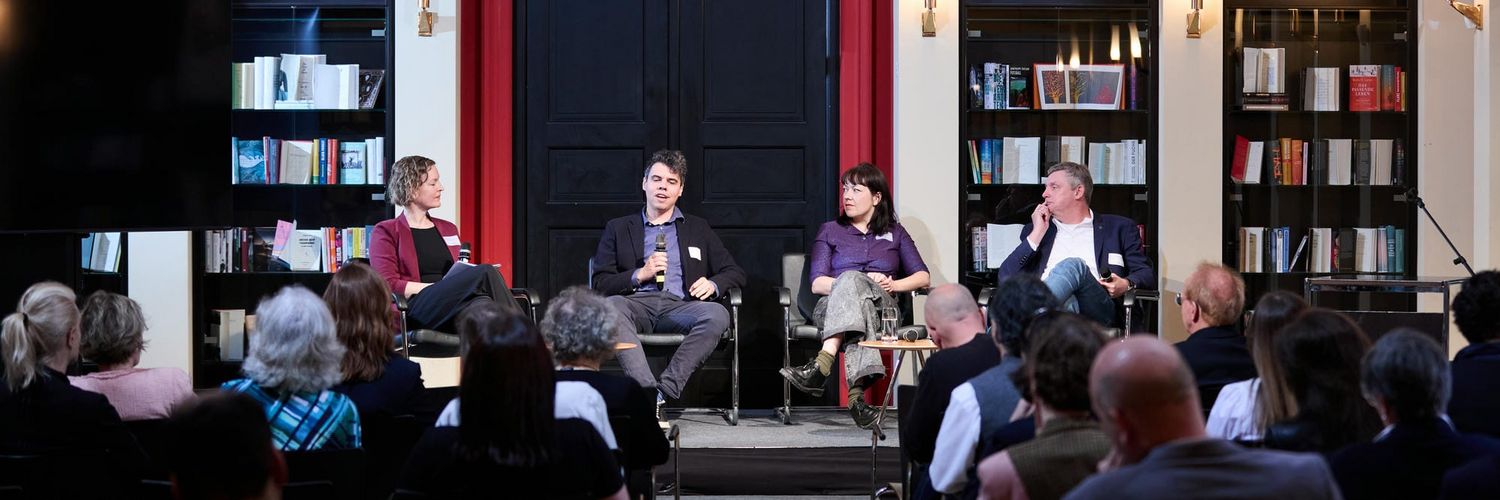
Due to the relevance and complexity of the topic, the foundation has decided to award two fellowships in the first year of the program.

"The exceptional quality and diversity of the submitted projects deeply impressed us. The selected fellows complement each other in a remarkable way, both in terms of content and artistic merit, and illustrate the broad spectrum of perspectives and forms of expression that this complex topic allows," explains Annette Schavan, Chair of the Hertie Foundation, regarding the jury’s decision.

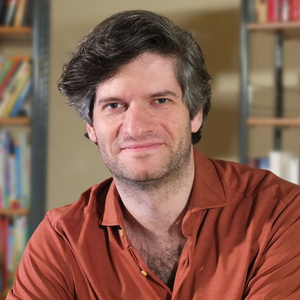
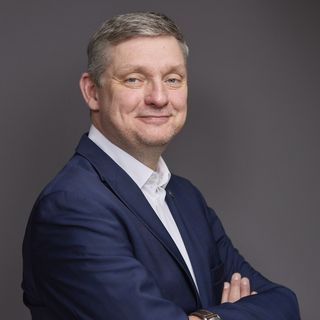
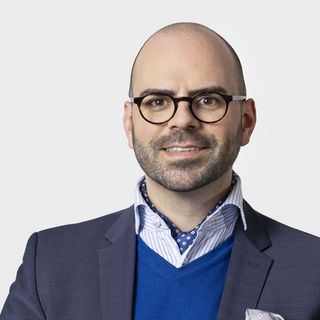
Arndt Emmerich

Cultural sociologist Dr. Arndt Emmerich, Junior Professor at the University of Hertfordshire in England, will use the scholarship to study urban encounters between Jews and Muslims in Frankfurt and London.

"His academic excellence is combined with the ability to contribute complex insights to a broader societal dialogue. His attitude, characterized by seriousness, empathy, and intellectual honesty, was particularly impressive. He thus embodies the aspirations of the Silvia Tennenbaum Scholarship in an outstanding way," says Stefanie Kreyenhop, member of the jury.
Three Questions for Arndt Emmerich

Why are you interested in the relationship between Jews and Muslims in Europe?

I am interested in this relationship because it serves as a barometer for the central challenges facing post-migrant societies in Europe. In public debate, Jewish and Muslim communities are often portrayed as antagonistic opposites. This ignores the complexity and resilience of their actual relationships and overlooks the various local communities of solidarity that have developed from shared experiences of structural discrimination and exclusion as minorities in Germany.

With my research, I want to correct these oversimplifications with empirical, ethnographic facts about coexistence and solidarity. I want to show that in the everyday life of neighborhoods, away from the political headlines, there is often a multifaceted and intergenerational connection that is invaluable for the stability of our democracy.

What did you find particularly remarkable in your previous research in Frankfurt's Bahnhofsviertel?

I found the resilience and the pragmatic approach to neighborhood support that has developed between Jewish and Muslim actors over decades particularly remarkable. My research has shown that these relationships are often deeply rooted in shared experiences of marginalization, migration, and hardship – in other words, in their shared status as a minority. These “urban scripts of conviviality” are much older and more robust than the formal dialogue initiatives of the last twenty years. They include mutual protection and economic solidarity and demonstrate that the foundations of coexistence in local neighborhoods lie not in abstract tolerance, but in concrete cooperation that has grown over generations.

Who do you hope to reach with your planned non-fiction book?

With my planned non-fiction book, I hope to reach three key groups. First, I want to reach politicians and urban planners to provide them with evidence-based insights into the actual impact of integration and cultural policies. Second, I want to reach teachers and students to offer them a nuanced ethnographic perspective on the history and sociology of diversity in Germany. Most importantly, I want to reach the general public, who often only see polarized images through headlines. The book is intended to serve as a counter-narrative, to inspire courage, and to highlight the power of everyday connections and society's capacity for bottom-up change.

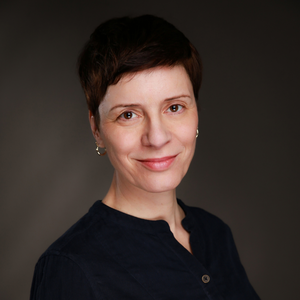
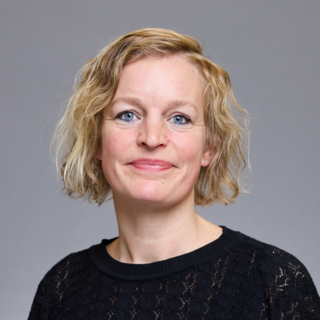
Dana von Suffrin

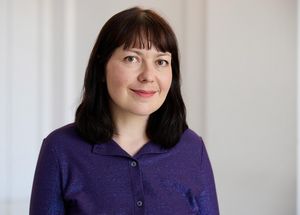
The writer Dr. Dana von Suffrin will use the grant to write a screenplay about the life story of Philipp Auerbach, a Jew who survived the Holocaust and in 1946 became State Commissioner for Racial, Religious, and Political Persecution in Bavaria, a position he held with great dedication until he was unjustly convicted as a result of an antisemitic smear campaign and subsequently took his own life.

"The jury was enthusiastic about this contribution to the culture of remembrance, which offers a broad audience insight into a tragic fate and illustrates, through this historical case, the fatal effects of hate speech and defamation," reports Prof. Dr. Maximilian Benz, member of the jury.

Three Questions for Dana von Suffrin

How did you come up with the idea of ​​exploring the fate of Philipp Auerbach?

I'm from Munich and had heard about Auerbach repeatedly, including during my studies; I'm a historian. I've already worked artistically on several historical topics, and I wrote a radio play about the displaced persons in Munich. That's when I came across Philipp Auerbach and his agency again. His life story deeply moved me; it wasn't a typical political biography. I then spent a long time considering how I could fictionalize the material while still doing justice to the historical figure and his tragic fate.

What moves you about this story, and why is it an important contribution to our culture of remembrance?

Firstly, Auerbach is truly almost forgotten – that in itself is a scandal. I was personally very impressed by the energy, moral resolve, and willingness to help that Auerbach showed in assisting his clients. Incidentally, he also included other victim groups, such as Sinti and Roma, very early on; that was very, very progressive at the time. Secondly, his biography and his work also tell us a great deal about the lived reality of displaced persons in the post-war period – and conversely, of course, about Germany in the 1950s.

Why does the television film format appeal to you for your work?

I initially wrote a radio play that takes place almost entirely in the State Compensation Office. Auerbach hardly appears in it – I almost exclusively had others speak about him because I thought that way I could symbolically show that, as the antisemitic scandal began and the noose tightened around his neck, he eventually ceased to be an actor in this whole drama and became merely a victim. For the screenplay, I want to take a different approach; Auerbach should be the central figure.

Call for Applications

The Silvia Tennenbaum Scholarship is aimed at authors, critics and artists whose practice is based on writing and who deal with the topics of anti-Semitism, remembrance culture and democracy. European applications are welcome and a very good knowledge of German is required.

As part of the program, the scholarship holders implement a concrete project. This can be a publication, an exhibition or a film script. They also take part in internal and external events organized by the Hertie Foundation and participate in exchange formats with Frankfurt-based initiatives and organizations in the field.

During the six-month fellowship, the fellows spend three months in Frankfurt. The periods of the residency can be chosen flexibly.

The scholarship holders receive a monthly grant of 2,000 euros for six months and a rent subsidy of 2,500 euros for three months in Frankfurt.

The scholarship is awarded once a year.

The next call for applications will take place in 2026.

Criteria and jury

A jury from the Hertie Foundation will decide on the award, judging the entries according to the following three key criteria:

  • Relevance Is the chosen topic significant for the social debate? Does it shed light on new and relevant perspectives or aspects?  
  • Originality Is the artistic approach original and creative? Does the intended form of realization fit the topic?
  • Radiance   Does the planned project promise to have an impact on public perception and inspire other authors and artists?

Silvia Tennenbaum

„I want to somehow manage to be an ambassador from the old world. I want to find ways in which the history of the Jews in Germany can be preserved in its true form.“ 

More about the name giver

Members of the Jury

Prof. (HSG) Dr. Sascha Spoun
Prof. Dr. Maximilian Benz
Elisabeth Niejahr

Kreyenhop

Stefanie Kreyenhop

Julia Karnahl

Contact

Julia Karnahl

Are you convinced by this project? share it

Read more.

The Digital Holocaust Memorial (DHM) is an interactive, digital educational offering of participatory remembrance culture, which is supported by the Hertie Foundation via the Fund for Combating Anti-Semitism and Raising Awareness. Dr. Felix Klein, Federal Government Commissioner for Jewish Life and the Fight against Anti-Semitism, recommends the DHM as an important and forward-looking contribution to the culture of remembrance.

Read more

With the “Fund for Combating Anti-Semitism and Raising Awareness”, the Hertie Foundation supports projects and initiatives that are committed to researching and combating anti-Semitism and Jewish life in Germany, in addition to its existing commitment. By supporting educational and interactive projects, we want to help educate and strengthen society and promote tolerance.

Mehr erfahren